Free Express Shipping Australia-Wide | International Shipping Available
A professional guide to app setup, tool connection, sensor activation, programming and TPMS relearn procedures — written by real people with hands-on experience. If anything is unclear or doesn’t suit your vehicle, please call us. We’re always happy to help.
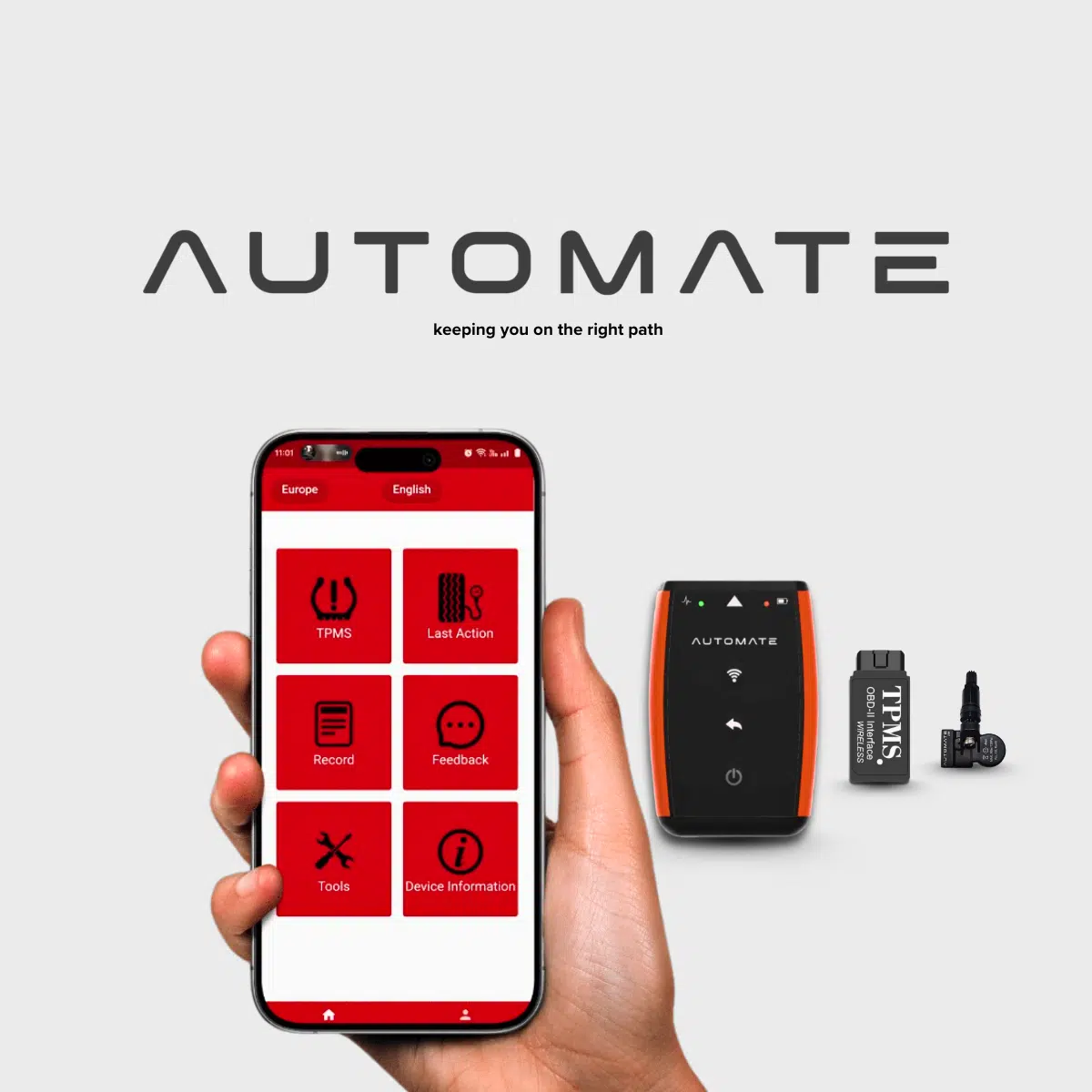
Everything you need to activate, clone, program and relearn TPMS sensors from your phone.
The AUTOMATE Bluetooth Programmer is a mobile-based TPMS service solution designed to help users read sensor data, duplicate IDs, create new IDs where supported, and follow the correct sensor relearn method after installation.

The main TPMS area used for activation, programming and learning functions.
Before connecting the programmer, download the correct app and allow Bluetooth access.

Install the DAM100 app from the App Store. Search “DAM100” or scan the QR code above.

Install the Automate Link app from Google Play. Search “Automate Link” or scan the QR code above.
Open the app, tap the connection icon, then follow the pairing steps.
Open the app, tap the connection icon, then follow the pairing steps. The device usually appears as Auto NFC_XXX. Make sure the Bluetooth Programmer tool is also switched ON.

Launch the Automate Link (Android) or DAM100 (iPhone) app from your home screen.

Tap the TPMS icon to begin searching for and connecting to the Bluetooth programmer.

A successful connection is confirmed by a green Wi-Fi logo appearing in the app.
Set the correct vehicle market before programming or relearning sensors.
Make sure the correct vehicle market is selected before programming or relearning sensors. Imported vehicles can use different TPMS systems depending on their original sales region.

Found after clicking the TPMS button from the main menu. Select the correct vehicle market before beginning the TPMS process.

Choose the app language that is easiest for you to follow throughout the programming process.
Trigger the original sensors and read their IDs before replacement.
The activation function triggers original sensors and reads their IDs before replacement — especially useful when cloning existing sensor data onto new AUTOMATE sensors.


Choose the vehicle make from the list. In this example, select Ferrari.

Choose the correct model year range and frequency for your vehicle.
Choose the programming method that suits your vehicle and situation.
After reading the old sensors, the programmer can prepare new replacement sensors using the method that suits the vehicle. The system will display a “No Sensor” error if a TPMS sensor is missing, unresponsive, or malfunctioning.

Retrieve the current sensor IDs by pointing the programmer at the existing valve stems. Best for duplicating onto new AUTOMATE sensors for a seamless replacement. Select each wheel position (LF, RF, LR, RR) and copy each sensor ID in turn.

Manually enter the sensor ID printed on the body of the sensor. Use this method only when confident — especially useful for dead or damaged sensors that cannot be read by the programmer.
Generate a completely new sensor ID when the original cannot be retrieved by any method. Note: some vehicles require additional steps to program the new IDs into the ECU.
The final step before the TPMS warning light turns off.
Once the sensors are programmed, the vehicle may still require a final learn process before the TPMS warning light will turn off fully.

Some vehicles automatically recognise new sensors after a drive cycle — no additional steps required.
Some vehicles require a manual relearn sequence following manufacturer instructions — available in the “Learn” tab of the app.
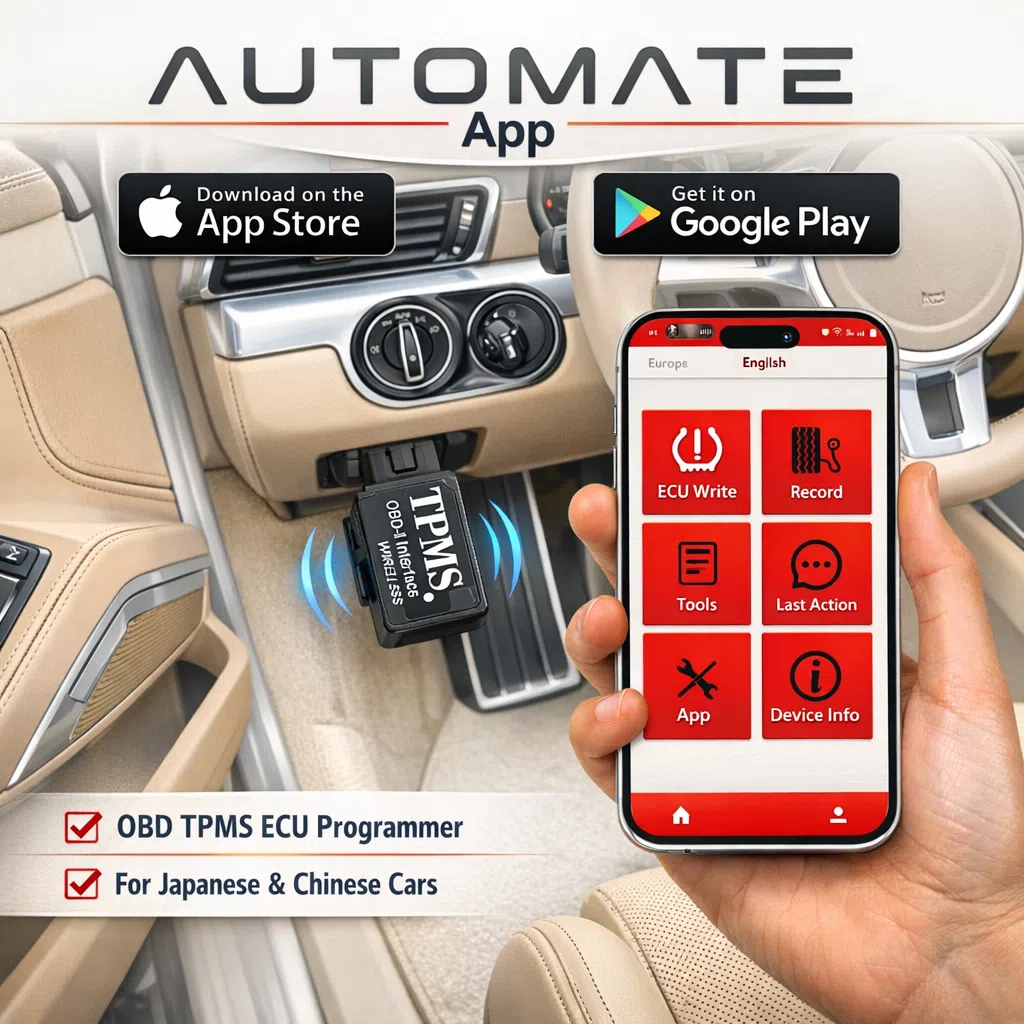
Some vehicles require sensor IDs written into the ECU. Plug the OBD device into the OBD port, connect via the VCI button in-app, then go to the Programming tab and tap Write ID to complete registration.
Additional features available within the AUTOMATE app.

Leave feedback directly through the app to help improve the product and support.

View all past vehicles programmed with the device — useful for workshops managing multiple jobs.

Displays details of the most recently programmed vehicle for quick reference.
Create an account to sync your data across compatible devices.
The app includes a user area for account registration and login. Registering lets you sync programming history across all compatible devices.
Open the app and go to “User” from the main menu.
Tap “Login / Register” to begin creating your account.
Fill in your details to create an account and verify your email address.
Log in to sync your data across all compatible devices.
Quick solutions to the most frequently encountered issues.
Check Bluetooth is turned on, the correct app is installed, and the tool is switched on and held nearby.
Move the tool closer to the valve stem area and check the original sensor is still active and not dead.
The vehicle may still require a drive cycle, static relearn, or OBD ECU registration to complete the process.
Always confirm make, model, year and original market (not current registration country) before programming.
If you need assistance with activation, cloning, programming, or the correct TPMS relearn process — contact MyTPMS Australia. We’re happy to guide you through it.
