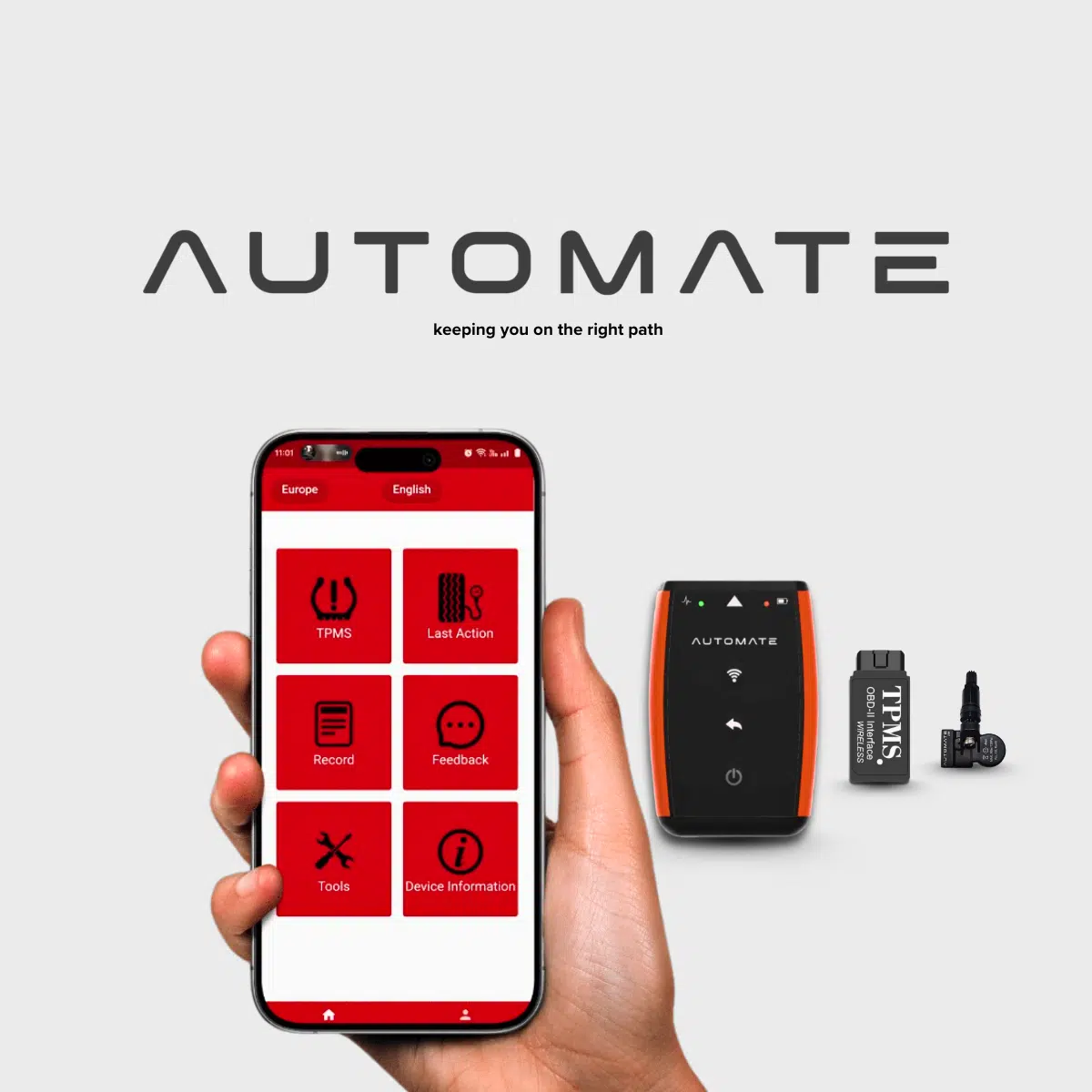
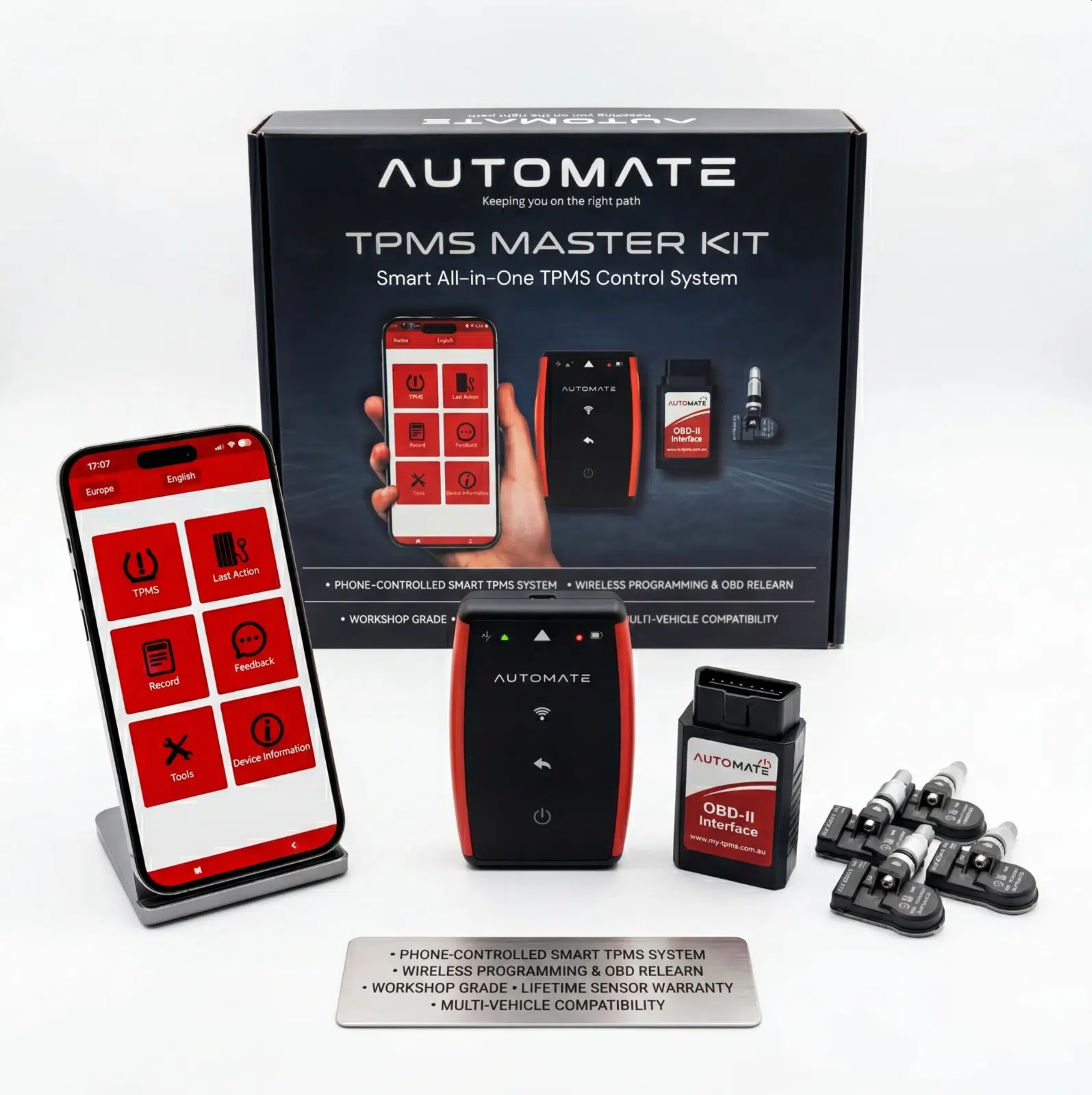
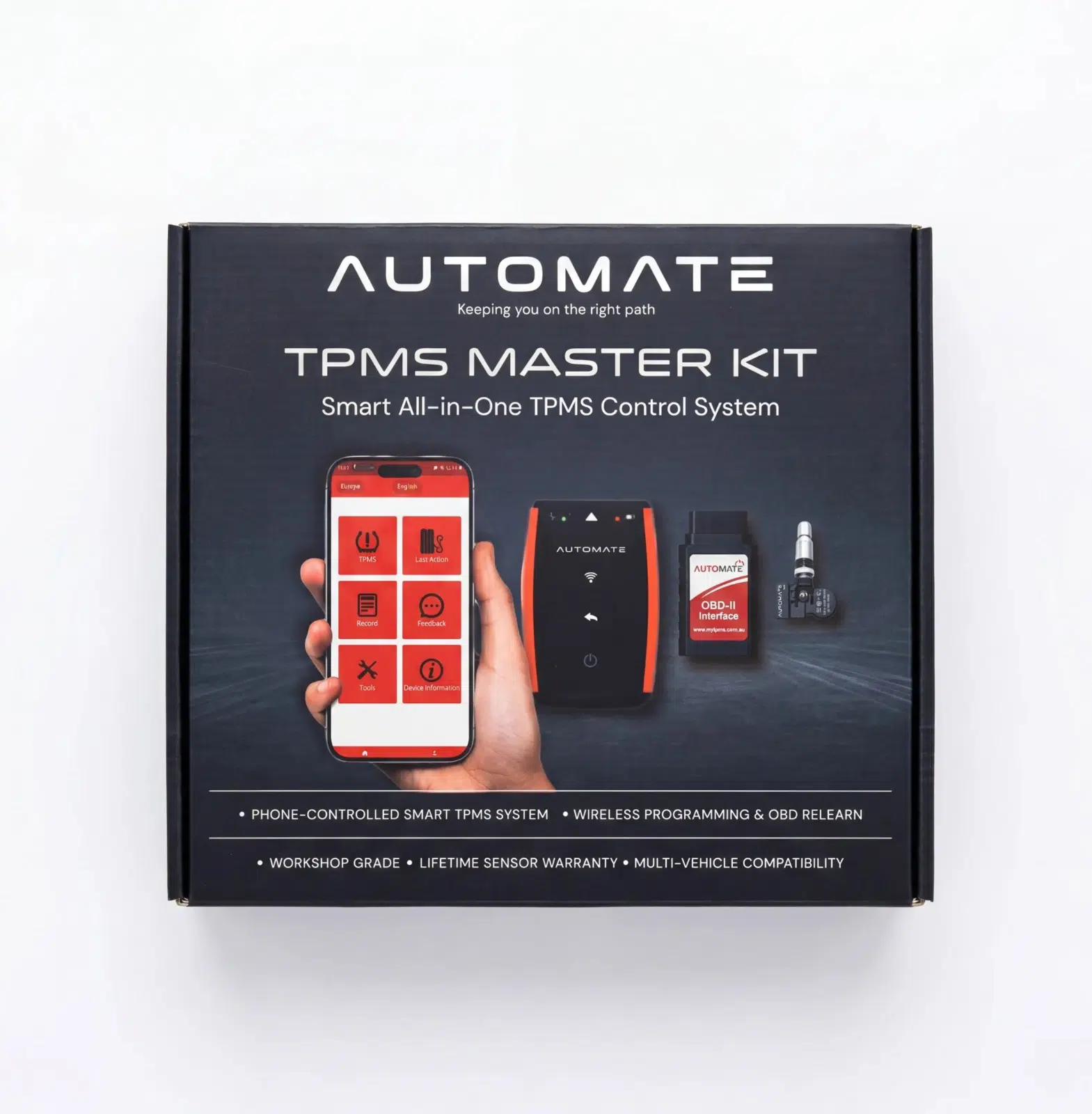
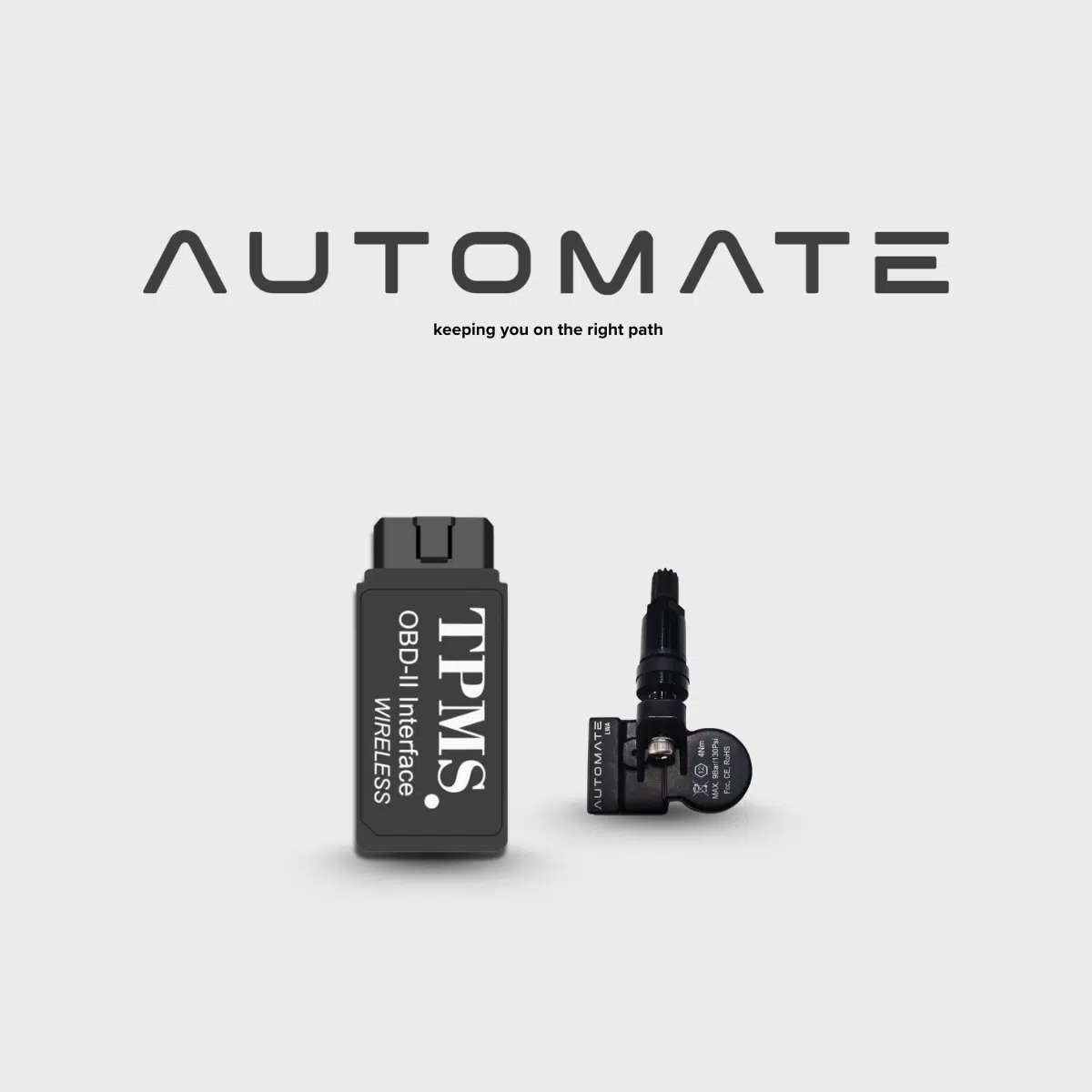
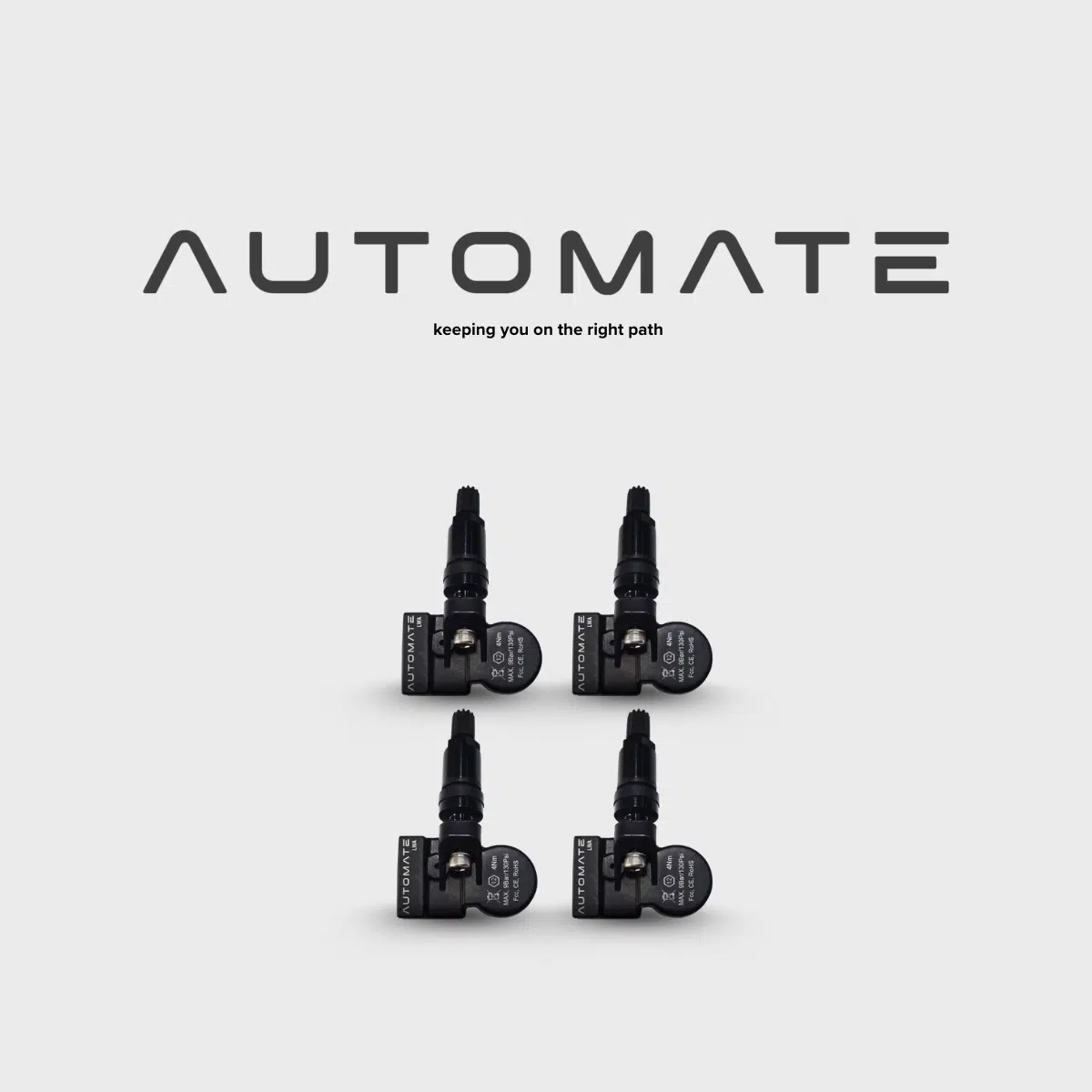
Take control of TPMS replacement with a complete DIY sensor and programming system.
Includes 4 compatible AUTOMATE TPMS sensors, Bluetooth TPMS Programmer and Bluetooth OBDII TPMS interface, giving you the hardware required for supported sensor programming, cloning and vehicle-side TPMS registration procedures.
Ideal for replacing failed or ageing sensors, fitting aftermarket wheels, setting up an additional wheel set, or keeping your own TPMS programming equipment for future use.
Kit includes:
4 × AUTOMATE TPMS sensors
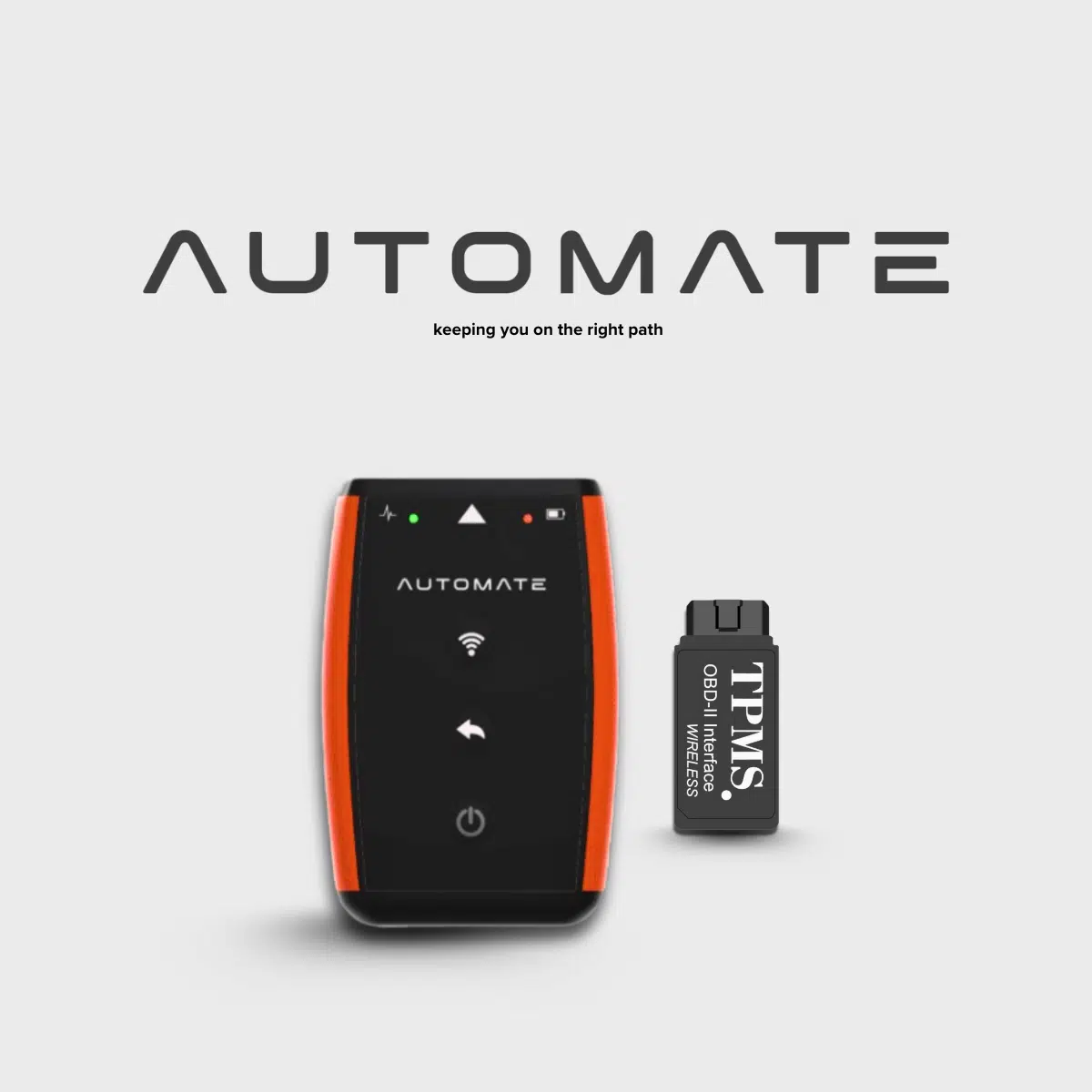
Bluetooth TPMS Programmer
Bluetooth OBDII TPMS Reader / Writer
Phone app support
Setup instructions
MyTPMS Australia technical support
Important: TPMS systems vary significantly between vehicle makes, models and years. Depending on the vehicle, the correct procedure may involve automatic relearn, manual relearn, sensor cloning or OBD registration. Physical installation of the sensors inside the wheels still requires a tyre shop.
Need help with this product?SMS yourself the link or request a call back from our TPMS team.
Save for later
Send this product to yourself
We currently support Australian mobile numbers only for SMS. Enter your mobile number, or add your email address below and we will send you a copy of this product link.
Baojun ChangAn Chery Citroen Ford Geely Haval Landwind Leopaard Lynk & Co Opel/Vauxhall Peugeot Renault Renault Samsung Tata Xpeng Zeekr 2004 - 2028
Genuine Manufacturer OE:
Sensor Brand:
AUTOMATE
Frequency:
315 MHz / 433 MHz
Relearn Type:
Via Tool
Made:
EEC-manufactured and quality-controlled to meet Original Equipment performance standards
Quality:
Premium OE-style TPMS replacement solution, selected for reliable fitment, consistent performance and backed by MyTPMS Australia compatibility support.
Delivery Information:
Free express shipping Australia-wide. Australia-wide Estimated delivery is usually 1-3 business days after dispatch, and international delivery within 7-21 business days with tracking provided where available. See the Shipping Policy for dispatch, delivery, and pickup details.
Returns:
Returns accepted in accordance with our Returns & Refund Policy. Change-of-mind returns must be requested within 30 days of delivery. Programmed, installed, paired, activated, connected, or used TPMS sensors, tools, and electrical items may not be eligible for change-of-mind return unless required by law.
Product Description
AUTOMATE DIY TPMS MASTER KIT
Understand It.
Program It.
Relearn It.
A complete TPMS sensor and programming system designed for compatible vehicles — giving you the equipment required to prepare replacement sensors and complete the appropriate supported TPMS setup procedure.
✓
4 compatible AUTOMATE TPMS sensors
✓
Bluetooth TPMS sensor programmer
✓
Bluetooth OBDII TPMS interface
✓
Programming & supported cloning functions
✓
Setup guidance & MyTPMS Australia support
START BY UNDERSTANDING TPMS
Replacing a TPMS Sensor Is More Than Simply Replacing a Valve
A TPMS sensor is a small battery-powered electronic transmitter mounted inside the wheel. It measures tyre pressure and sends information wirelessly to the vehicle.
Each sensor also has an electronic identification number and communicates using a TPMS protocol designed for a particular vehicle application.
This means the replacement sensor needs to be correct for the vehicle, prepared correctly and then recognised by the vehicle using the appropriate TPMS relearn method.
THE MOST IMPORTANT THING TO UNDERSTAND
Programming, Fitting and Relearning Are Different Jobs
These three terms are often mixed together, but each refers to a different stage of TPMS replacement.
01 — SENSOR PROGRAMMING
Prepare the Replacement Sensor
The included Bluetooth TPMS Programmer communicates directly with compatible AUTOMATE sensors and prepares the sensor for the supported vehicle application.
02 — PHYSICAL INSTALLATION
Install the Sensor Inside the Wheel
The tyre needs to be moved away from the rim so the original sensor can be removed and the replacement sensor installed.
This part requires tyre-changing equipment and should be performed by a tyre shop or suitably equipped technician.
03 — VEHICLE RELEARN / REGISTRATION
Make Sure the Vehicle Recognises the Sensors
After installation, the vehicle needs to recognise the replacement sensors. The correct method varies by vehicle and may involve automatic relearn, a manual activation procedure, sensor cloning, OBD registration or another supported method.
WHAT IS A TPMS SENSOR ID?
Think of It as the Sensor’s Electronic Serial Number
Every TPMS sensor transmits an electronic identification code together with its pressure information.
This allows the vehicle’s TPMS system to distinguish the sensors associated with the vehicle from other TPMS transmitters nearby.
When replacement sensors use new IDs, some vehicles need to learn or register those new IDs before the TPMS operates normally.
WHY VEHICLE COMPATIBILITY MATTERS
Not Every Vehicle Learns TPMS Sensors the Same Way
There is no single universal TPMS relearn procedure. Different vehicles use different systems.
METHOD 1
Automatic / Drive Relearn
Some vehicles can detect correctly prepared replacement sensors automatically after installation and driving under the required conditions.
METHOD 2
Stationary / Tool Relearn
Some vehicles enter a learning mode and require each sensor to be activated in a particular wheel sequence.
METHOD 3
OBD Sensor ID Registration
Some vehicles store the sensor IDs in a control module. When new IDs are used, those replacement IDs may need to be written into the vehicle using a compatible OBD procedure.
METHOD 4
Sensor ID Cloning
Where the vehicle application and original sensor condition allow it, the existing sensor ID can be copied to a compatible replacement sensor so the replacement uses an identity already associated with the vehicle.
AN EASY WAY TO THINK ABOUT IT
A Working Sensor and a Recognised Sensor Are Not Always the Same Thing
A replacement TPMS sensor can be operating correctly and transmitting tyre pressure, yet the vehicle may still fail to recognise it if the correct setup or relearn procedure has not been completed.
That is why correct sensor selection, programming and vehicle relearn all matter.
WHAT’S INCLUDED?
A Complete Sensor & Programming System
Each part of the Master Kit performs a different role in compatible TPMS replacement.
4 × AUTOMATE TPMS Sensors
Four replacement sensors for compatible vehicle applications. These are the parts that are physically installed inside the wheels.
1 × Bluetooth TPMS Programmer
Communicates directly with compatible TPMS sensors and supports sensor activation, reading, programming and supported cloning functions.
1 × Bluetooth OBDII TPMS Interface
Communicates with supported vehicle TPMS systems through the OBDII port and is used for compatible vehicle-side procedures where sensor ID writing is available.
Phone App, Instructions & Support
The supported app workflow and setup instructions help guide the programming process, with MyTPMS Australia available for compatibility and setup assistance.
THE COMPLETE MASTER KIT
The Tools Stay With You
The four sensors are installed in the wheels. The Bluetooth Programmer and OBDII interface remain yours for future compatible TPMS servicing and sensor replacement.
PROGRAMMING vs RELEARNING
Programming the Sensor Does Not Automatically Program the Vehicle
This is one of the most important differences to understand.
SENSOR SIDE
Bluetooth TPMS Programmer
Works directly with compatible TPMS sensors.
✓ Activates supported TPMS sensors
✓ Reads supported sensor information
✓ Programs compatible AUTOMATE sensors
✓ Performs supported sensor ID cloning
VEHICLE SIDE
Bluetooth OBDII TPMS Interface
Works with supported vehicle TPMS systems.
✓ Connects through the OBDII port
✓ Used for supported vehicle-side TPMS functions
✓ Allows compatible sensor ID procedures where supported
✓ Complements the sensor programmer when OBD registration is required
WHAT IS SENSOR CLONING?
Copying an Existing Sensor ID to the Replacement
Where an original sensor can still be read and the vehicle application supports cloning, its existing ID can be programmed into a compatible AUTOMATE replacement sensor.
Instead of introducing a completely new electronic identity, the replacement sensor can operate using an ID the vehicle already knows.
Cloning is not the correct procedure for every vehicle. The appropriate method depends on the vehicle and TPMS system.
WHAT IF THE ORIGINAL SENSOR IS COMPLETELY DEAD?
A Dead Sensor May Not Be Readable for Direct Cloning
Cloning normally requires the original sensor ID to be known.
If the sensor no longer transmits and cannot be read, another supported replacement or registration procedure may be required depending on the vehicle.
This is why vehicle compatibility and the correct relearn method should be confirmed before programming or installation.
315 MHz & 433 MHz
Frequency Is Only One Part of TPMS Compatibility
TPMS sensors communicate using radio frequency, with compatible applications operating across frequencies such as 315 MHz and 433 MHz.
However, matching the frequency does not automatically make a sensor compatible with a vehicle.
The replacement sensor must also use the correct supported TPMS communication protocol and configuration for that particular vehicle.
FROM ORDER TO WORKING TPMS
The General Process
The exact steps depend on the vehicle, but this explains the overall workflow.
Step 1 — Confirm the Exact Vehicle
Confirm the vehicle make, model, year and, where required, VIN or original sensor details.
Step 2 — Determine the Correct TPMS Method
Identify whether the vehicle uses automatic relearn, a stationary procedure, sensor cloning, OBD registration or another supported method.
Step 3 — Prepare the Sensors
Use the included Bluetooth Programmer and supported workflow to prepare the compatible AUTOMATE replacement sensors.
Step 4 — Have the Sensors Installed
Have a tyre shop or suitably equipped technician physically install the sensors inside the wheels.
Step 5 — Complete the Vehicle Relearn
Follow the appropriate procedure for the specific vehicle. Where supported and required, use the included OBDII interface for the relevant vehicle-side TPMS function.
Step 6 — Verify the TPMS
Confirm that all sensors are being received correctly and that there are no unresolved TPMS warnings.
IMPORTANT
You Still Need a Tyre Shop for Physical Installation
This is a DIY TPMS programming and relearn kit. It does not replace tyre-changing equipment.
TPMS sensors are mounted inside the wheels, so the tyre must be moved away from the rim for safe removal and installation.
A tyre shop or suitably equipped technician should perform the physical installation.
WHY BUY THE MASTER KIT?
More Than Four Replacement Sensors
Replace ageing or failed sensors Four compatible AUTOMATE replacement sensors are included.
Keep your own programming equipment The Bluetooth Programmer and OBDII interface remain yours after installation.
Set up aftermarket or replacement wheels Useful for compatible applications where additional wheels require their own TPMS sensors.
Clone supported sensor IDs Readable original IDs may be copied to compatible replacement sensors where the application supports cloning.
Handle supported OBD registration Keep the vehicle-side programming hardware available for compatible TPMS procedures.
Reuse the equipment later The tools remain available for future compatible TPMS servicing and AUTOMATE sensor replacement.
TPMS QUESTIONS
Frequently Asked Questions
Will this kit work with every vehicle?
No. TPMS systems vary by vehicle make, model, year, market, frequency and sensor type. Compatibility should always be confirmed before programming or installation.
Will my vehicle automatically recognise the new sensors?
That depends on the vehicle. Some vehicles automatically learn replacement sensors, while others require a manual relearn, cloning, OBD registration or another supported procedure.
Does programming the sensor mean it is already paired to the vehicle?
No. Programming the replacement sensor and teaching the vehicle to recognise it are separate processes.
Why does the kit include two programming tools?
The Bluetooth Programmer communicates with compatible TPMS sensors. The OBDII interface communicates with supported vehicle systems. They perform different jobs.
What is sensor cloning?
Cloning copies a readable original sensor ID onto a compatible replacement sensor where the vehicle application supports that method.
What if the old sensor is completely dead?
If the original sensor cannot be read, direct cloning may not be possible. Another supported replacement or registration method may be required depending on the vehicle.
Can I reuse the tools?
Yes. The Bluetooth Programmer and OBDII interface remain yours for future compatible TPMS servicing and AUTOMATE sensor work.
Do I still need a tyre shop?
Yes, for physical installation. TPMS sensors are mounted inside the wheel and require tyre-changing equipment for safe fitting.
What if I’m not sure which TPMS method my vehicle requires?
Provide MyTPMS Australia with your vehicle make, model, year and, where requested, VIN or original sensor information. We can help identify the appropriate compatible sensor and setup procedure before installation.
MYTPMS AUSTRALIA SUPPORT
Not Sure Which TPMS Procedure Your Vehicle Uses?
Send us your vehicle make, model, year and vehicle details and our TPMS team can help determine whether the compatible setup requires automatic relearn, manual relearn, sensor cloning, OBD registration or another supported procedure.